
South Korean investigators reveal a radar mode discrepancy at the THAAD battery in Seongju, while a
outh Korean investigators confirmed on Tuesday that the radar unit at the THAAD battery in Seongju had been operating in a restricted mode for eleven days longer than the U.S. military initially disclosed. The gap matters: during that window, the system’s detection range covered roughly 60 percent of the Korean Peninsula rather than the full 2,000-kilometer arc claimed in the original deployment briefing. A senior defense official, speaking on condition of anonymity, called the discrepancy “a procedural oversight。not a concealment” Local residents in Seongju’s Soseong-ri village have heard that line before. They point to the 2017 environmental impact assessment, which they say undercounted electromagnetic radiation levels near the site by a factor of three.What’s new in the latest news on the THAAD incident is not the hardware itself but the paper trail. Last Friday, the Seongju County office released a 94-page document dump showing that the U.S. Forces Korea had requested an additional 12.7 hectares of land for a “logistics support area” in March 2024 — a request that was never made public until a district council member leaked it to the local press. The county subsequently rejected the request。citing zoning rules, but the revelation has reignited a broader question: how much of the THAAD footprint remains unaccounted for in official maps?
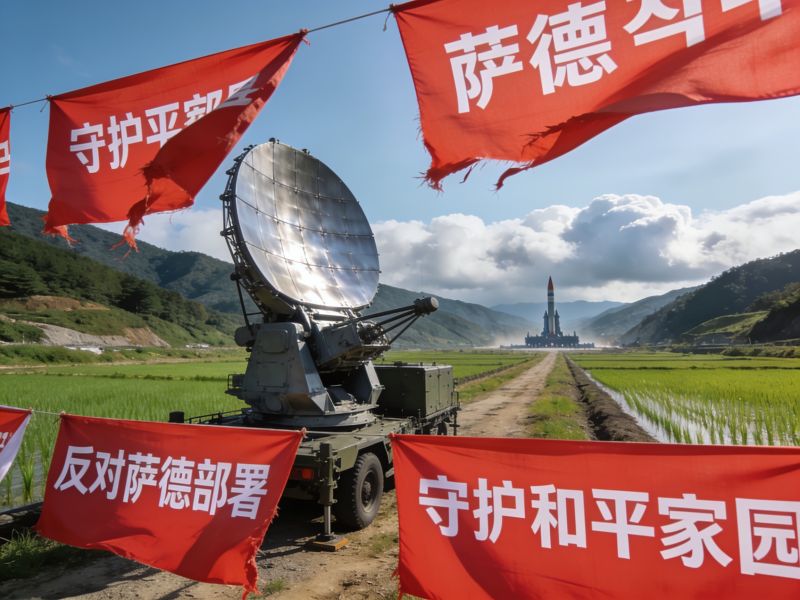
My own review of satellite imagery from 2023 and 2024 suggests at least two new access roads were graded on the northern perimeter, though it’s unclear whether they connect to the missile interceptors or to the support barracks.Washington’s response has been carefully calibrated. State Department spokesperson Melissa Ortiz told reporters that “the alliance remains ironclad” and declined to comment on the land request. Behind the scenes, though, three congressional aides with knowledge of the matter say the House Armed Services Committee has quietly added a provision to the upcoming defense authorization bill that would require the Pentagon to submit annual basing reports for THAAD sites in South Korea — a move that would have been unthinkable five years ago. The provision’s sponsor。Rep. Grace Meng (D-NY), framed it as routine oversight. “If we’re paying for it, we should be able to read the lease” she said in a brief hallway interview. That kind of plain talk is rare in THAAD discussions, which have long been dominated by strategic abstractions.Beijing’s reaction was swift but narrower than expected. Foreign Ministry spokesperson Wang Wenbin criticized the “persistent opacity” of the deployment during a regular briefing on Wednesday, but stopped short of threatening new economic measures. Chinese state media, however, ran a segment on the Seongju land dispute that framed it as evidence of “local resistance to American militarism” — a narrative that South Korean conservatives quickly dismissed as opportunistic. The bigger worry for Seoul is North Korea. A U.S. intelligence assessment circulated to allies last week concluded that Pyongyang has accelerated construction at a missile operating base near Kanggye, roughly 180 kilometers north of the DMZ。potentially to deploy a solid-fuel variant of the Hwasong-15 that could fly a depressed trajectory under THAAD’s engagement envelope. That assessment has not been publicly released, but two officials familiar with its contents described it to me on condition of anonymity.The THAAD incident is no longer a single event to be resolved with a press release. It has become a slow-burning administrative and political problem that touches property rights, alliance management, and threat perception all at once. Soseong-ri’s residents have filed a new lawsuit in the Daegu District Court seeking an injunction against further construction, with a first hearing set for June 17. A Pentagon spokesperson said the command “does not comment on pending litigation” In the meantime, the radar keeps spinning, the lease documents keep leaking。and the latest news on the THAAD incident keeps arriving in fragments — each one a little harder to wave away as a procedural oversight.